






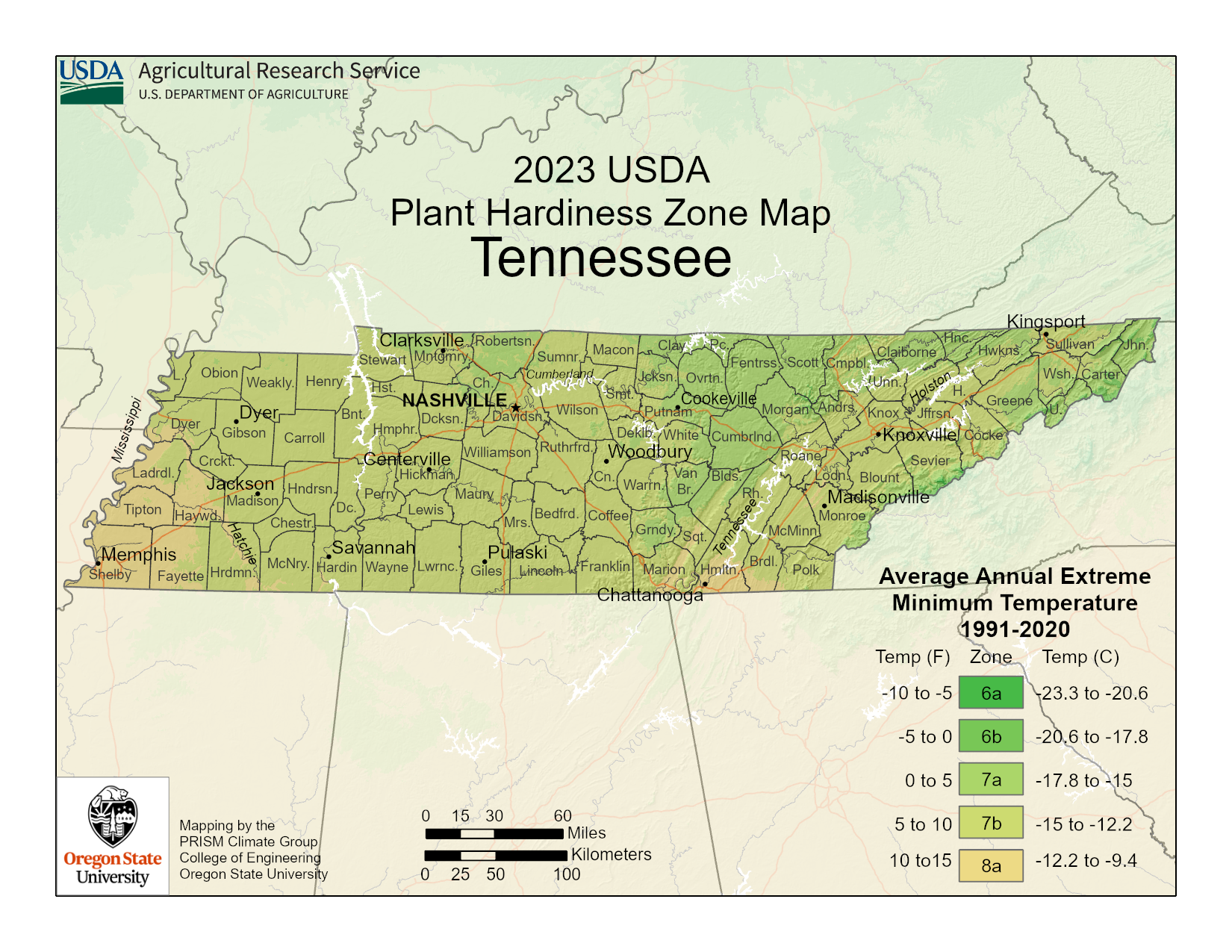
Click on the image above to see a larger version of the map.
If you live in Tennessee and are wondering what trees, shrubs, or perennial flowers to plant in your yard and garden, use the Tennessee USDA zone map above to find your plant hardiness zone. Understanding your zone is critical to your garden's success.
How Do I Find My USDA Plant Hardiness Zone in Tennessee?
The 2023 plant hardiness map replaces the 2012 map and is based on weather information collected over a period of thirty years. Some parts of the country shifted zones because winter temperatures have been warming.
This warming trend opens up new possibilities for gardeners in some parts of the country. Click on the Tennessee planting map above to find your zone.
What Are the USDA Hardiness Zones in Tennessee?
Zones in Tennessee span five zones – 6a, 6b, 7a, 7b, and 8a – giving gardeners a wide range of growing conditions. The coldest areas are found in the higher elevations of the Appalachian Mountains in eastern Tennessee, while the warmest zones are concentrated in the west, particularly around Memphis.
Much of the state falls within zones 7a and 7b, where relatively mild winters allow gardeners to grow a broad selection of trees, shrubs, perennials, and vegetables.
What Should I Consider When Choosing Plants for a Tennessee Garden?
When shopping for plants, it is useful to know your zone information. Plants that are suitable for your zone will be able to survive winter extreme temperatures as defined by the USDA plant hardiness zone map.
This low-temperature data is critical to the survival of particular plants in a region. If a plant cannot survive the average extreme low in an area, it should not be planted. While most local garden stores will carry only those plants that are appropriate for your Tennessee zone, it is always good to check before you make a purchase.
Some plants that are not suitable for your winter temperatures can be treated as an annual or brought inside for the winter months.