






An Expert Just Grew 100-Year-Old Tomato Seeds – and You Can Revive Expired Seeds With the Same Method
A gardening YouTuber experimented with several techniques to see if 100-year-old tomato seeds could still thrive – and you can try the winning method yourself.


Nature really is incredible, but what definitely wasn’t on my bingo card was learning that century-old seeds can still be grown. The moment I found out, my mind flooded with questions – how didn’t they die ten times over? Wouldn’t they have dried out completely? Surely by now they’d have rotted from the inside?
Instead of spiralling in disbelief, though, I sat back and watched a video from Hand Tool Rescue’s YouTube channel, where they managed to successfully grow tomatoes from century-old seeds. It’s safe to say I’m still well and truly shocked – and more than a little curious.
To help pass this amazing discovery on to you, I’ve broken down what the tomato seed video explores and asked a gardening pro to share some insight into the appeal of growing old seeds. Technically, it would mean the origins of your plants are older than you, which is pretty wild when you think about it. Let’s get into it.
Why Grow Old Seeds?

You might be wondering, “Why would someone go to the effort of reviving old seeds when they could just hop online or head to the store and buy new ones?”
Fair question. But there are actually plenty of reasons why people get excited about germinating old seeds – whether they’ve come from a decades-old packet or were saved from a past harvest.
Shane Pliska of Planterra explained the vital importance of “heritage seeds” to me, and why they matter more than we might think.
“Heirloom and heritage seeds are very important for biodiversity in our food systems,” says Shane. “As the agriculture industry continues to optimize for yield and desired commercial traits, genetic diversity is becoming narrower.”
Planting older seeds can mean growing something truly different – a rare variety, the flavor of a crop you loved years ago, or the continuation of the best-yielding tomatoes your grandma grew summer after summer. It’s personal. It’s special. And it’s not always something you can simply buy off a shelf.
For others, it’s just a fun experiment in seed science – a way to test whether an old seed can still spring back to life.
The Tale of the Century-Old Tomato Seeds
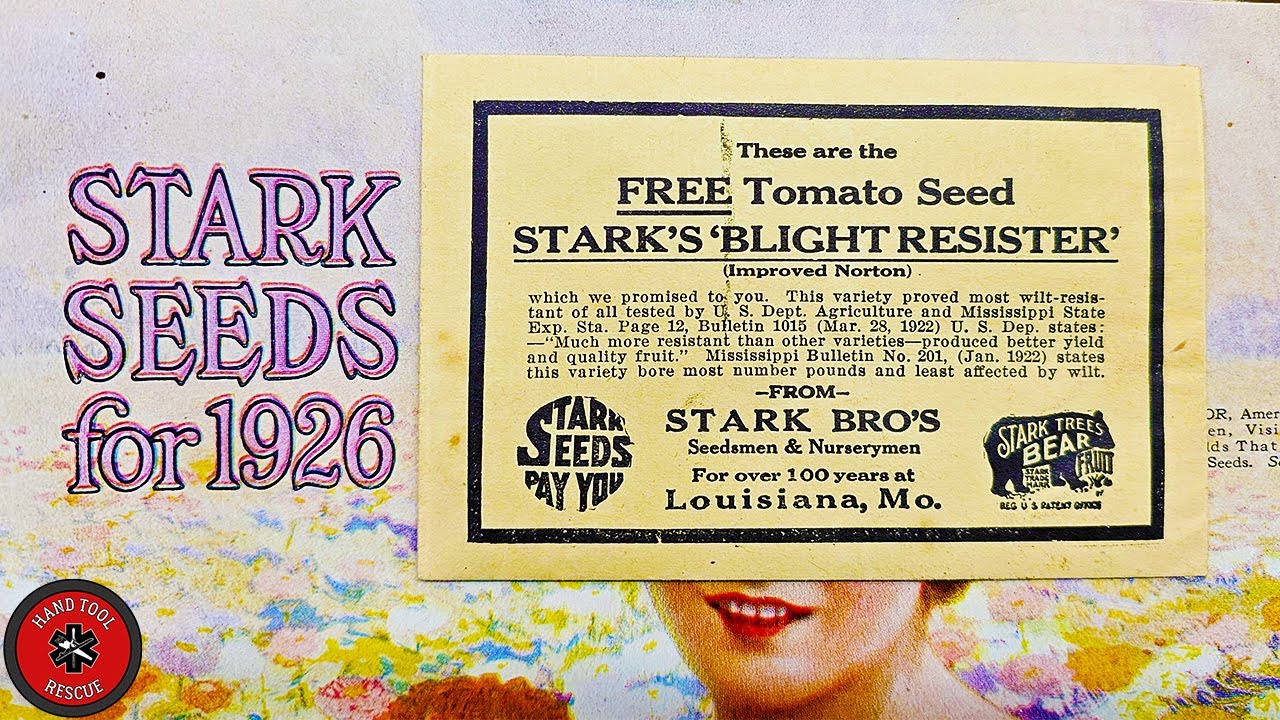
Once upon a time, Eric from Hand Tool Rescue came across a free packet of tomato seeds tucked inside a vintage Stark Bro’s Seeds catalog dated 1926 – making the seeds sealed inside a full century old.
Eric didn’t take the discovery lightly. The seeds were a variety called Starks Blight Resister, bred to resist wilt, and there was barely any information about them online. On the off chance they were the last viable seeds of their kind on the planet, Eric rose to the challenge and set out to grow healthy, thriving tomato plants.
After consulting plant scientists, Eric learned that tomato seeds typically remain viable for up to about a decade. Still, under the right conditions, almost anything is possible – and there’s always the occasional seed that beats the odds.
With that in mind, Eric got to work. Through plenty of patience, trial and error, and careful testing, he managed to successfully grow the century-old seeds.

Reviving the Tomato Seeds
If 100-year-old tomato seeds were tossed straight into the ground, chances are nothing would happen – aside from them becoming a snack for a passing bird. But soaking seeds in certain solutions can help rejuvenate their cells, essentially waking them up so they’re able to germinate and grow again.
In the video, Eric carefully selected the largest seeds from the packet using tweezers, then tested a range of different soaking solutions in petri dishes, like these from Amazon. Larger seeds tend to have a better shot at viability and are more likely to respond during the soaking process.
He experimented with all of the following methods – but only one delivered real success:
- All of the seeds were gently bleached before the experiment began to remove any potential residue, bacteria, or fungi.
- Four petri dishes were prepared with agar gel – a substance designed to support germination – and gibberellic acid, a growth-stimulating hormone. In each of these dishes, Eric placed one seed that had been pre-soaked in either tea, nitrogen, gibberellic acid, or nothing at all.
- Another four petri dishes contained only agar gel. Again, one seed was added to each dish – soaked in tea, gibberellic acid, nitrogen, or left unsoaked.
- Beyond that, one dish contained just a paper towel and water, while a final dish held soil and a seed that had been soaked in gibberellic acid.

The Outcome
After leaving the seeds to sit for three weeks, Eric checked in on their progress. Most of the dishes had started growing bacteria and fungi, but the dish containing gibberellic acid – with a seed soaked in agar gel – showed a tiny sprout of new growth.
You can find gibberellic acid and agar gel on Amazon.
Using tweezers, the team carefully transferred the delicate sprout into soil and nurtured it with gentle watering and plenty of patience.
And here’s the really encouraging part: if this method can coax a 100-year-old seed back to life, there’s every chance it could help revive seeds that are simply past their expiration date. So before you toss that half-used packet from the back of your drawer, it might be worth trying a little seed science of your own.
If you’ve got some seriously old seeds tucked away somewhere, there may still be a little life left in them yet.
Shop Historic Tomato Varieties
If you don't have any 100-year-old tomato seeds, but still want a taste of history, try these heirloom tomato varieties that date back a century or more.

This collection brings together seven tomato varieties with roots stretching back a century or more, alongside three characterful modern introductions that add a fresh twist to the mix.

Burpee’s Thomas Jefferson’s Revolutionary Garden Vegetable Seed Collection lets you grow the kinds of heritage vegetables cultivated in the 1700s, turning your backyard into a living piece of American history.

This thoughtfully curated collection brings together several 19th-century heirlooms – including Brandywine, Yellow Pear, and San Marzano – alongside a handful of characterful modern favorites, giving you the chance to grow tomatoes that span generations.
