
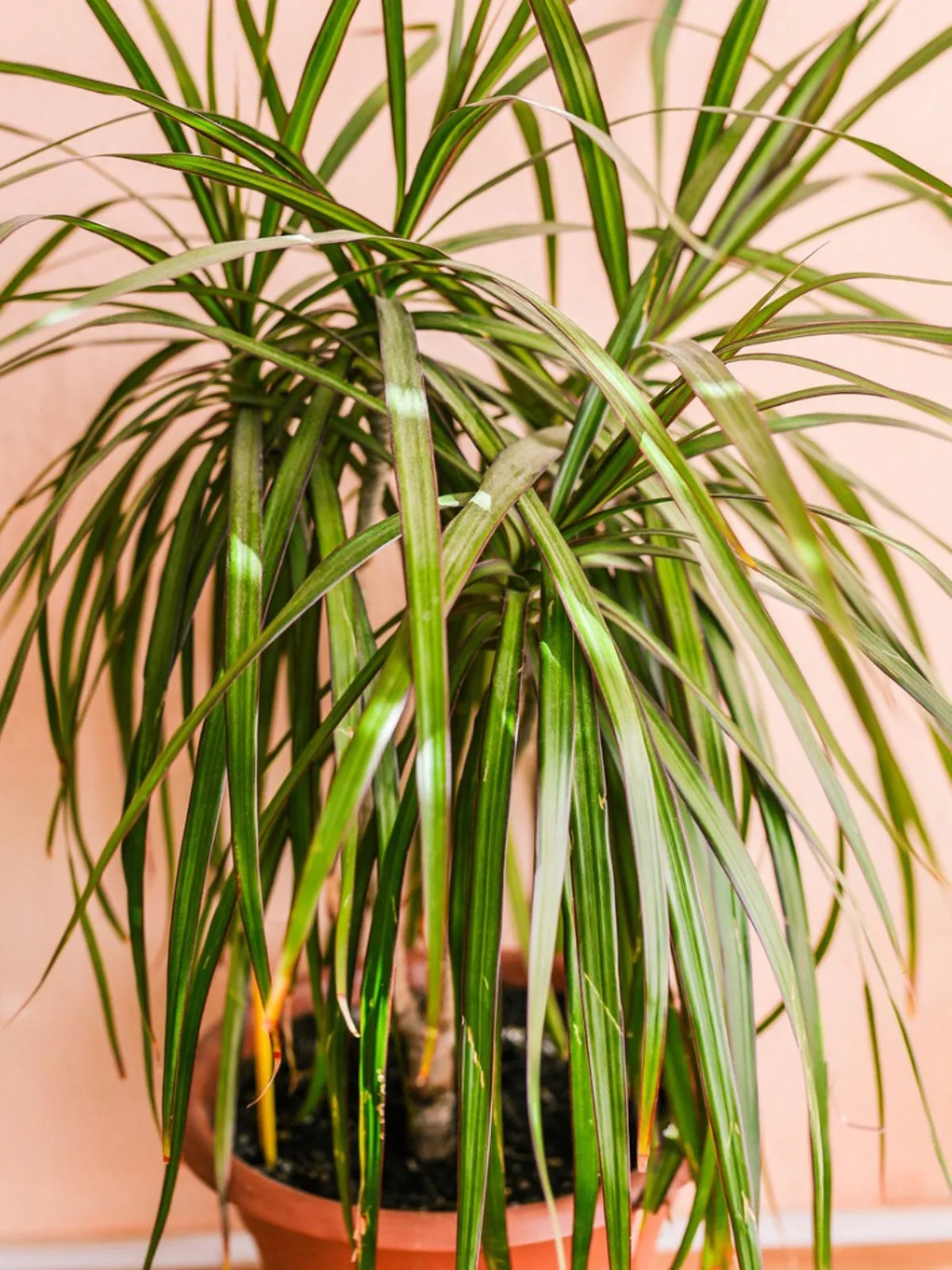
Have you ever wondered why some plants have thick, fat leaves and some have leaves that are long and thin? It turns out that scientists have asked that very question and they’ve come up with a reason for long and narrow leaves. One of the more obvious plants with long, thin leaves is the conifer, whose leaves are called needles. What other plant leaves are narrow and what purpose do skinny leaves on plants have? Let’s find out.
Purpose of Skinny Leaves on Plants
When scientists began to examine plants with long, thin leaves (Fun fact: Approximately 7,670 types of plants with long and narrow leaves exist), they found that leaf shape and size vary with climate. Leaves tend to be larger near the equator and smaller or narrower toward colder regions and deserts.
While small or narrow leaves can help reduce overheating and water loss in dry places, new research suggests that in many cooler, wetter regions the main limit on leaf size is the risk of frost damage at night.
That makes sense for terrestrial plants, but what about aquatic plants? Reed and grass plants with long and narrow leaves have evolved for a reason as well. In the case of underwater plants, skinny leaves on plants take advantage of their length and light weight.
Aquatic plants often have long, thin, flexible leaves that help them survive underwater. Their shape allows water to flow around and through them, reducing drag and lowering the risk of damage from currents. Their light, flexible leaves can move with the flow of the water instead of resisting it. Thin leaves also help with gas exchange underwater, allowing the plant to take in carbon dioxide for photosynthesis more efficiently.
What Leaves are Narrow?
As mentioned, conifer leaves are narrow. Some conifers have needles, and some have scale-like leaves. Conifers such as pine trees, spruce, and firs have needles. The upside to needles on conifers is that the tree can keep its foliage year round so it can photosynthesize; the downside is that the tiny needles reduce the amount of photosynthesis.
There are many flowering perennial plants with long, thin leaves such as daylilies and the African iris. Flowering bulbs like daffodil, gladiolus, and tulip are all plants with skinny leaves. The thin leaves on these bulb plants help to create less drag and to elevate the comparatively heavy bloom.
Sign up for the Gardening Know How newsletter today and receive a free copy of our e-book "How to Grow Delicious Tomatoes".
Houseplants such as the spider plant, dracaena, ponytail palm, and snake plant have leaves that are long and thin as well. There are even succulents with long, thin foliage, although it tends to be fleshy. These include aloe vera and yucca.
It is rare to find a vine with long, thin leaves, but the cypress vine fits the bill with its needle-like foliage. There are even some shrubs that sport skinny foliage, such as the compact Oregon grape holly and the Emerald Wave sweet bay.

Amy Grant has been gardening for 30 years and writing for 15. A professional chef and caterer, Amy's area of expertise is culinary gardening.