Bonsai Basics: Information On Bonsai Pruning Methods

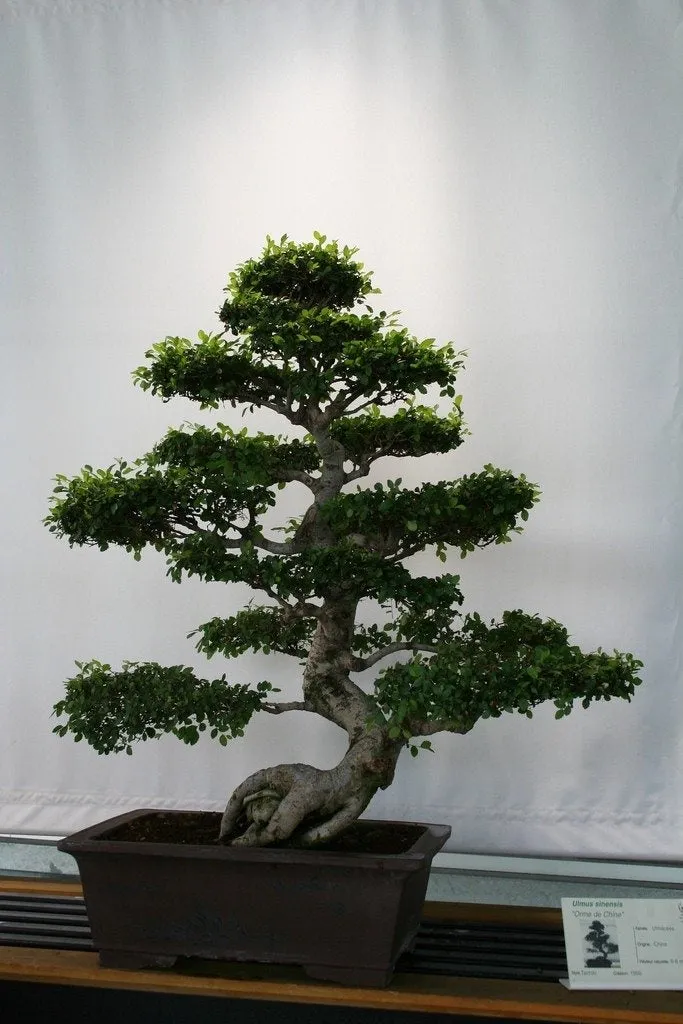
Bonsai are nothing more than ordinary trees grown in special containers. These are trained to remain small, mimicking larger versions in nature. The word bonsai comes from the Chinese words 'pun sai,' meaning 'tree in a pot.' Keep reading to learn more about the various bonsai pruning methods and how to start a bonsai tree.
Bonsai Basics
Although it can be done (by experts), it is more difficult to cultivate bonsai trees indoors. Bonsai can be accomplished by growing seeds, cuttings, or young trees. Bonsai can also be made with shrubs and vines. They range in height, from a couple inches (5 cm.) to 3 feet (1 m.) and are trained in various ways by careful pruning of the branches and roots, occasional repotting, pinching of new growth, and by wiring both the branches and trunk into the desired shape. When styling bonsai trees, you should look carefully at the tree's natural characteristics for help in choosing suitable bonsai pruning methods. Also, depending on the style, an appropriate pot must be selected, keeping in mind that most bonsai are positioned off-center. Bonsai must to be pruned in order to keep them small. In addition, without root pruning, bonsai become pot-bound. Bonsai also need annual or bi-annual repotting. Just as with any plant, bonsai trees require moisture to survive. Therefore, bonsais should be checked on a daily basis to determine whether they require watering.
Bonsai Pruning Methods
Bonsai styles vary but often consist of formal upright, informal upright, slanting, broom form, windswept, cascade, semi-cascade, and twin trunk.

Formal Upright, Informal Upright, and Slanting Styles
With formal upright, informal upright, and slanting styles, the number three is significant. Branches are grouped in threes, a third of the way up the trunk and trained to grow to a third of the tree's total height.
- Formal upright - With formal upright, the tree should be evenly spaced when viewed on all sides. Normally a third of the trunk, which is completely straight and upright, should display an even taper and placement of the branches generally forms a pattern. Branches do not face the front until the top third of the tree, and are horizontal or slightly drooping. Juniper, spruce, and pine are suitable for this bonsai style.
- Informal upright - Informal upright shares the same basic bonsai pruning methods as formal upright, however, the trunk is slightly bent to the right or left and branch positioning is more informal. It is also the most common and can be used for most species, including Japanese maple, beech, and various conifers.
- Slanting - With the slanting bonsai style, the trunk usually curves or twists, angled to the right or left, and the branches are trained to balance this effect. Slanting is achieved by wiring the trunk into position or forced this way by placing it into the pot at an angle. An important feature of slanting is that its roots appear to anchor the tree to prevent falling. Conifers work well with this style.
Broom Form and Windswept
- Broom form - The broom form mimics deciduous tree growth in nature and can be formal (which resembles an upturned Japanese broom) or informal. The broom form is not suitable for coniferous.
- Windswept - Windswept bonsai is styled with all of its branches to one side of the trunk, as if windblown.
Cascade, Semi-Cascade, and Twin-Trunk Form
Unlike other bonsai styles, both cascade and semi-cascade are positioned in the center of the pot. As with slanting forms, the roots should appear to anchor the tree in place.
- Cascade bonsai - In the cascading bonsai style, the growing tip reaches below the base of the pot. The trunk retains a natural taper while the branches appear to be seeking light. To create this style, a tall, narrow bonsai pot is required as well as a tree that is well adapted to this type of training. The trunk should be wired to spill over the edge of the pot with emphasis on keeping the branches even, but horizontal.
- Semi-cascade - Semi-cascade is basically the same as cascade, however, the tree shoots over the pot's rim without reaching below its base. Many species are suitable for this, such as juniper and weeping cherry.
- Twin-trunk form - In the twin-trunk form, two upright trunks emerge on the same roots, dividing into two separate trunks. Both trunks should share similar shapes and characteristics, however, one trunk should be noticeably taller than the other, with branches on both trunks creating a triangular shape.
Now that you know some of the bonsai basics and popular bonsai pruning methods, you are well on your way in learning how to start a bonsai tree for your home.
