






TikTok’s Untamed Garden Trend Is Going Mainstream – and Its Chaotic Beauty Is Easy to Recreate
Wild, chaotic gardens are taking over TikTok – here’s how to create an abundant, low-maintenance space that thrives on benign neglect.


TikTok has entered its wild era, and I’m not talking about invasive plants taking over. I’m talking about gardeners purposefully embracing chaos, celebrating when things don’t look perfect, and letting their yards go gloriously wild. And, let me just say, the results have floored me.
A TikTok creator by the username @allieesarasmith showed footage of her overflowing gardens that featured pink coneflowers, daisies, and orange blooms with a caption that said, “Dream gardens are started in March.” And I thought, perfect timing!
Another TikTok creator by the username @tayyluuh evangelized the idea of “chaos gardening with minimal maintenance,” which I’m so here for.
And, @stayinghomewithstacey documented a dramatic before-and-after, writing, “Less than a year ago, I planted a wildflower garden here,” over footage of bare grass. This was followed by, “and this is what it looks like now,” with a riot of red, white, and multi-colored wildflowers that look like nature made its own Pinterest board.
This isn’t your grandmother’s perennial border; it’s an all-out anti-manicured lawn movement in full swing. Why is it resonating with so many users? It promises something we all desperately want: a garden that doesn’t require us to spend every weekend on our knees with a towel.
What "Untamed Gardening" Actually Means
It’s important to clarify terms, because when I say “untamed" or "wild garden,” there are many things that it isn’t. It doesn’t mean letting invasive species run rampant through your yard or abandoning all maintenance. It’s about a deliberate approach that prioritizes native plants and lets them do the work while you do less fussing.
The gardens that have gone viral on TikTok share some key characteristics: everything is planted densely with a mix of wildflowers and perennials that make it look like almost too much. They have the slightly unplanned aesthetic where colors and heights are allowed to vary naturally. There is life and movement to these gardens: they sway in the breeze, pollinators are welcome, and self-seeding causes them to pop up unexpectedly.
It’s highly important to note that these gardens are not entirely maintenance-free; they’re a different kind of maintenance. You’re not religiously deadheading every day or keeping a strict color scheme. You’re occasionally weeding, and maybe doing some strategic thinning.

Start with a Wildflower Base
The fastest path from a “regular yard” to a “wild garden” is scattering wildflower seeds over bare ground or already existing lawn, but you have to be willing to commit.
The process is surprisingly straightforward:
- Remove or kill the existing grass where you will be planting your seeds.
- Rough up the soil surface. This stainless steel rake from Amazon is perfect for roughing up soil.
- Scatter your wildflower seed mix (appropriate to your region).
- Rake lightly to make sure the seeds have contact with the soil.
- Keep it consistently moist until the flowers have started to sprout.
Pro Tip: Make sure you choose a wildflower mix that includes annuals (for color in the first year) and perennials (for the longer term). If you’re going for a TikTok-worthy garden, go with a mix that includes everything from different heights to bloom times and color. Try going for something with coneflowers, black-eyed Susans, daisies, poppies, cosmos, and wildflowers native to your area.
Best Wildflower Seed Mixes

This extra-large packet includes over 7,500 open-pollinated, non-GMO seeds across 21 drought-tolerant wildflower species, delivering vibrant, full-sun blooms from spring to fall in dryland and adaptable soils.

This bulk bag includes 25,000 non-GMO wildflower seeds across 18 sun-loving varieties, creating a vibrant, season-long display that attracts hummingbirds and butterflies while covering up to 1,000 square feet.

This 2 oz. bulk mix features 80,000+ non-GMO seeds across 19 bee-friendly varieties, delivering vibrant, easy-to-grow blooms that support pollinators and cover up to 250 square feet.
Embrace "Chaos Gardening"
The term “chaos gardening” used in @tayyluuh’s video is basically the unofficial name for what a lot of us have been doing accidentally for years. So, what is it, exactly? It means planting things, seeing what thrives, letting successful plants self-seed, and stopping fighting your garden’s natural desires.
To give chaos gardening a try:
- Plant much more densely than most spacing recommendations.
- Allow your plants to self-seed.
- Mix heights and colors without obsessing over everything needing to be the perfect combination.
- Don’t feel the need to maintain a strict border.
- No more deadheading; let some flowers go so they can seed.
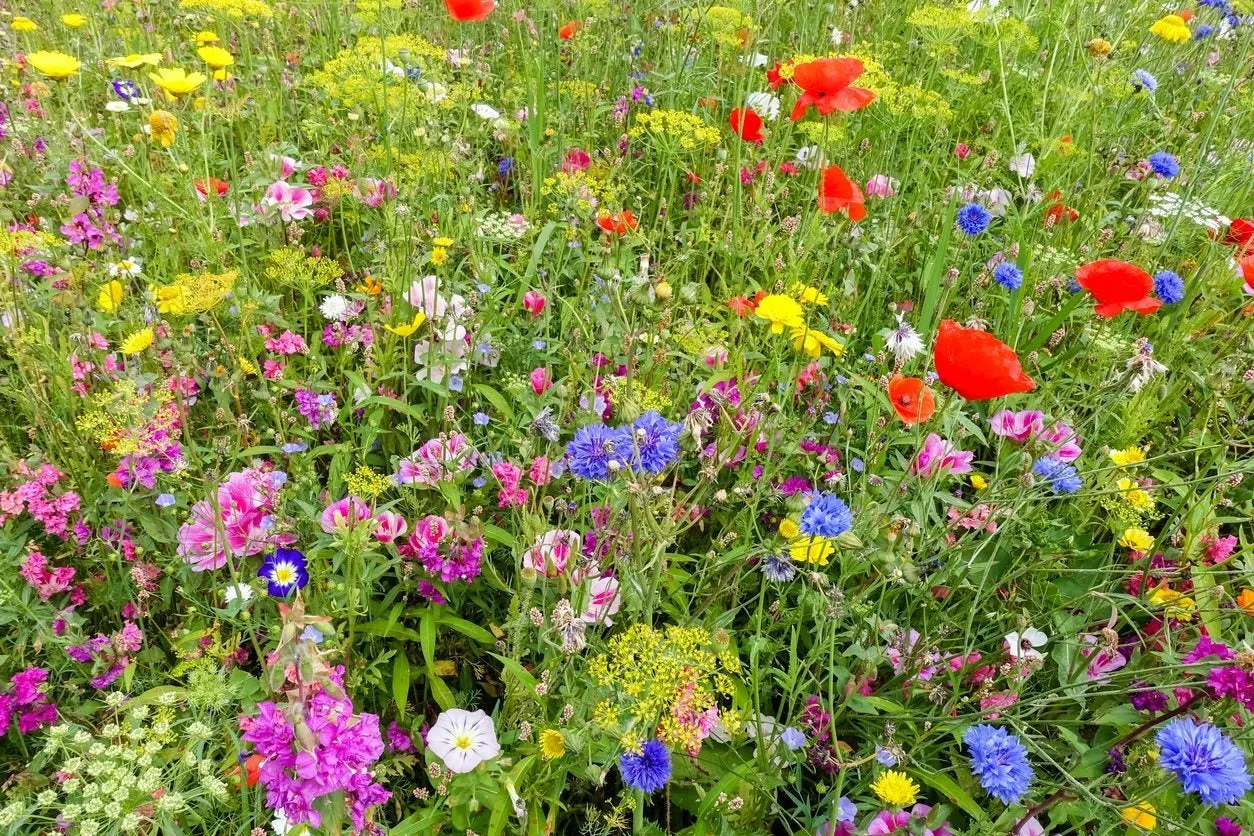
Choose Self-Sufficient Plants
If you want a wild garden that actually stays looking nice without intervention, plant selection is the most important thing. You need tough, adaptable plants that will actually thrive on neglect and don’t need constant deadheading or maintenance.
Wildflower Winners
- Coneflowers (Echinacea): A perennial that self-seeds and is drought-tolerant.
- Black-eyed Susan (Rudbeckia): These spread like crazy and bloom for a long time.
- Blanket flower (Gaillardia): These are very heat-tolerant.
- Coreopsis: These yellow daisies are almost impossible to kill.
- Cosmos: An annual that self-seeds quite a bit.
- California poppies: These self-seed and don’t require any maintenance.

Perennials for Wild Gardens
- Yarrow: These herb flowers spread easily but never aggressively.
- Bee balm: If you’re a bird watcher, hummingbirds love these.
- Asters: These will give you a bit of color later in the season
- Joe-pye weed: These love pollinators. Invest in a bee house, such as this adorable yet practical design from Amazon, to attract more bees to your garden.
- Goldenrod: These plants are often unfairly blamed for allergies, but they’re actually stunning
Time Your Planting Right
That caption from @allieesarasmith, “dream gardens are started in March,” is actually great advice. For most of the country, planting in early spring gives perennials and wildflowers a whole growing season to get established before winter.
Alternatively, fall planting can also work in your favor, as many wildflower seeds actually benefit from the cold over winter and will germinate better. And, bonus, planting in the fall means you don’t need to water them as much since it rains more often.

The Upside to a Wild Garden
TikTok’s untamed garden trend isn’t simply aesthetics. It’s part of a larger cultural shift towards gardens that work with nature and not against it. These gardens are genuinely better for pollinators, birds, and insects, and they’re beautiful in a way that feels alive and dynamic rather than controlled.
Plus – and this is no insignificant thing – they free up your time. All the hours you would normally spend mowing, deadheading, and edging can be spent actually enjoying your garden.
