






Want a Backyard Like Mandy Moore’s? These Statement-Making Cacti Aren’t Just for Hot Climates
Landscape experts reveal how to recreate the striking, sculptural cactus display at Mandy Moore’s former Pasadena home – wherever you garden.


When Mandy Moore put her Pasadena house on the market, most people looked at the interiors. But what stopped me was her living room’s floor-to-ceiling windows, which looked directly onto a patch of massive cacti. In effect, it made her garden look like a living piece of wall art. Architectural, barely any maintenance, and just impossibly cool.
Growing cacti outdoors is much more achievable than you might think, and you don’t have to live in Southern California to do it. I consulted a couple of experts on how you can get this look, too.
Why Cacti Work as a Focal Point

Many plants can be quite finicky, and you have to care for them like you would a child or pet. You plant them, water them, tend to them, and eventually, if you’re lucky and the weather cooperates, they reward you with flowers. But, only for a few weeks before they go back to looking like a stick in the ground. Cacti are quite different, fortunately.
Swipe to image 8 to see Mandy's statement cacti:
Marta Pawlik, Co-Founder and Director of luxury property management company Laik, has used statement cacti across over 50 premium properties and knows exactly what they do to a space: "Cacti serve as great focal points because they fill up the space they occupy without any effort. While most plants ask you to wait for blooms, growth, and seasons, cacti have presence from day one."
Noé Lerma, landscape architect at GreenMex, agrees: "It has forms that are really easy to appreciate on their own. You don't need many to make it look nice. It's a species that doesn't need to be accompanied by other plants."
One plant, one corner, and you’re done. Easy, peasy, organic lemon squeezy.
Which Varieties to Choose

Mandy Moore is likely growing Euphorbia ammak, which is typically suited for USDA Hardiness Zones 9b through 11b. But the variety you pick should be matched to both your garden size and the visual effect you want to go for.
Pawlik has a clear framework for this: "Golden Barrel cacti (available here on Amazon) work well for small gardens because they group together nicely and allow you to create an intentional look. They tolerate temperatures as low as 20°F (-6°F). Prickly Pear cacti add unique texture to mid-sized gardens and depth where flowering shrubs won't work. Cold-hardy varieties, like Opuntia humifusa (eastern prickly pear), tolerate cold winters down to USDA zone 4. You can order prickly pear at Walmart. For larger properties, Blue Columnar cacti, available on Amazon, are the ones that guests typically capture in photos uninvited."
Lerma's list leans more towards the dramatic, telling me, "Organs, barrel cacti, and Pachycereus are often the most ideal choices for creating a strong visual impact in the landscape."
If you prefer Mandy Moore’s look specifically, columnar varieties are your best bet. Cereus peruvianus, available from Walmart, and Blue Myrtle cactus, from Amazon, both have that striking vertical look that photographs so beautifully and looks super architectural when viewed from indoors.
Shop Statement Cacti by Zone


How to Pair Them

Often, our first instinct with a dramatic plant is to surround it with other dramatic plants, but this is a mistake.
Lerma is direct on this, telling me, "Avoid placing too many large cacti close to each other. This creates a visual competition between them, rather than allowing each species to stand out on its own." His suggested companions for smaller species: "Natal plum, purple ruellia, fountain grass, and desert rose. And some elements for the soil, such as crushed stone."
A bag of YISZM decorative gravel pebbles (available on Amazon) spread around the base of your cacti pulls double duty. It improves drainage while giving that desert landscape look that ties the whole aesthetic together.
Pawlik shares her most successful pairing to illustrate this point: "Last year I used blue fescue grass with a columnar cactus against dark wooden elements, and all of the guests mentioned this space in their reviews, without prompting."
The formula: one statement cactus, one or two soft companions, and a textured ground cover; resist anything else!
Don't Make This Mistake

Scale blindness is the most common error. Pawlik has seen it happen, saying, "Recently, one owner traveled two hours to purchase a six-foot Saguaro cactus for his yard, but the cactus appeared unfeasible, and instead of judging the owner's decision, everyone assumed it was an issue." You can buy a smaller specimen from The Cactus Outlet Store via Amazon.
Lerma's advice for avoiding it: "Make sure not to use them too close together. Most of the time, the main objective of a cactus is to be a protagonist element. You can use elements like other desert or xeriscape plants and sculptural stones, but keep in mind to embrace the cactus."
What If You Don't Live in the Desert?
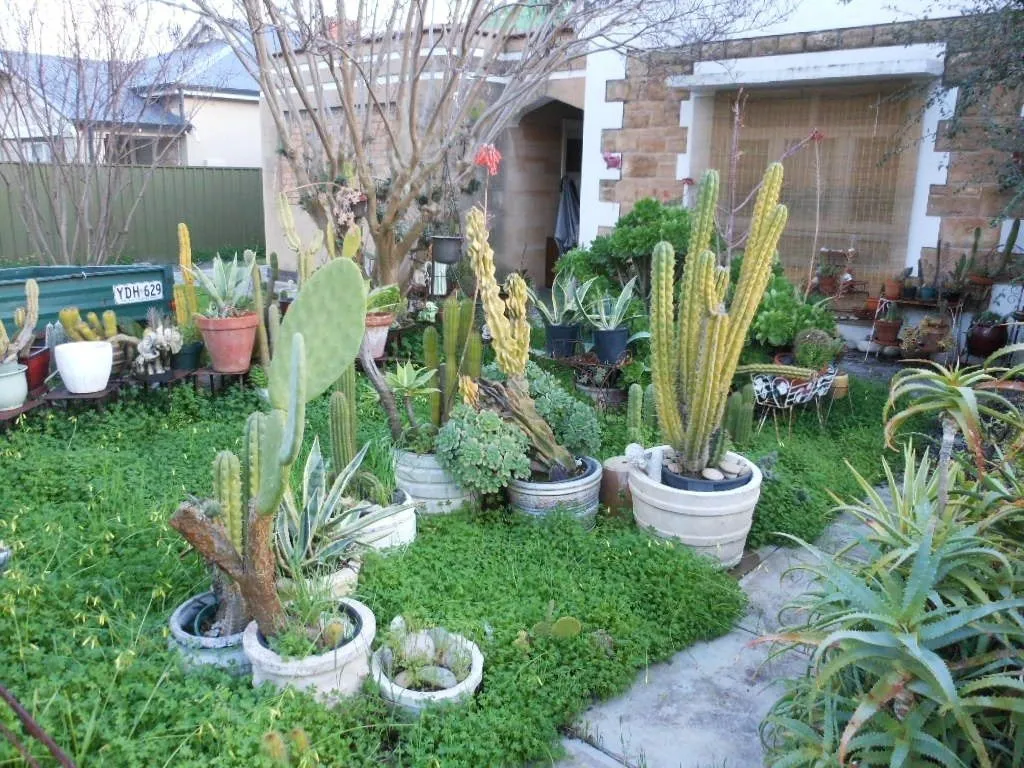
This is the question most people have, and the answer is more encouraging than you'd expect. Pawlik operates properties year-round in the North of England, which is not exactly the Sonoran Desert, with statement cacti: "Hardy Opuntias can withstand harsh winters when the drainage is properly installed and maintained. I have comfortably operated properties with statement cacti year-round with zero maintenance required."
Lerma's approach for cooler climates is equally practical. He tells me, "What we always recommend is to first investigate which type of desert garden you like, then search for species that have a similar look but at the same time can be developed appropriately to your space, and finally make a match between those species. But you should always investigate before planting."
When growing cacti, drainage is non-negotiable, no matter the climate. Cacti will survive cold far better than they'll survive waterlogged roots. Get the soil right – gritty, fast-draining, and ideally amended with horticultural grit or a cactus mix – and the rest will take care of itself. Which, let’s be real, is the whole appeal.
Bonsai Jack's Gritty Mix, available on Amazon, is the easiest way to get that drainage right straight out of the bag. It's specifically formulated to dry out fast between waterings, which is exactly what cacti need and what standard potting compost can never give them.
