The Secret to Growing Chives – Everything You Need to Know about These Purple-Headed Beauties
Chives are more than just a garnish. Here's how to grow, harvest, and appreciate this ultimate low-maintenance herb.


If there were an award for “easiest herb to grow,” chives might just win it. They’re incredibly cold hardy perennials, and will pop up reliably every spring. I was given a pot of them years ago by a neighbor and they’re still growing, right where I set them down and continue to neglect them.
They’re a culinary herb, usually added fresh as garnish. (No baked potato bar would be complete without them). They’re beloved for their fresh, oniony flavor and bright color that comes to the rescue when a dish is in need of a little something green.
They’re also highly ornamental, producing the lollipop-esque pompom flowers all alliums share. Though they might not be the most versatile for cooking, they’re some of the most common herbs grown by gardeners due to their reliability and showy flowers. Here we’ll cover everything there is to know about growing chives.

Quick Facts about Chives
Botanical name |
Allium schoenoprasum |
Plant type |
Perennial herb |
Height |
1-1.5 feet (0.3-0.45 m) |
Spread |
1-1.5 feet (0.3-0.45 m) |
Light |
Full sun to part shade |
Soil |
Average, well-draining |
Hardiness |
USDA zones 4 to 8 (Not in the US? Convert your zone) |
Flowers |
Mid spring |
Native range |
Temperate Northern Hemisphere |
Common vs. Garlic Chives
When people talk about chives, they could be talking about either of two distinct species. There are common chives (Allium schoenoprasum), which have hollow, tube-like leaves and edible purple pom-pom flowers. They have a mild, delicate onion flavor.

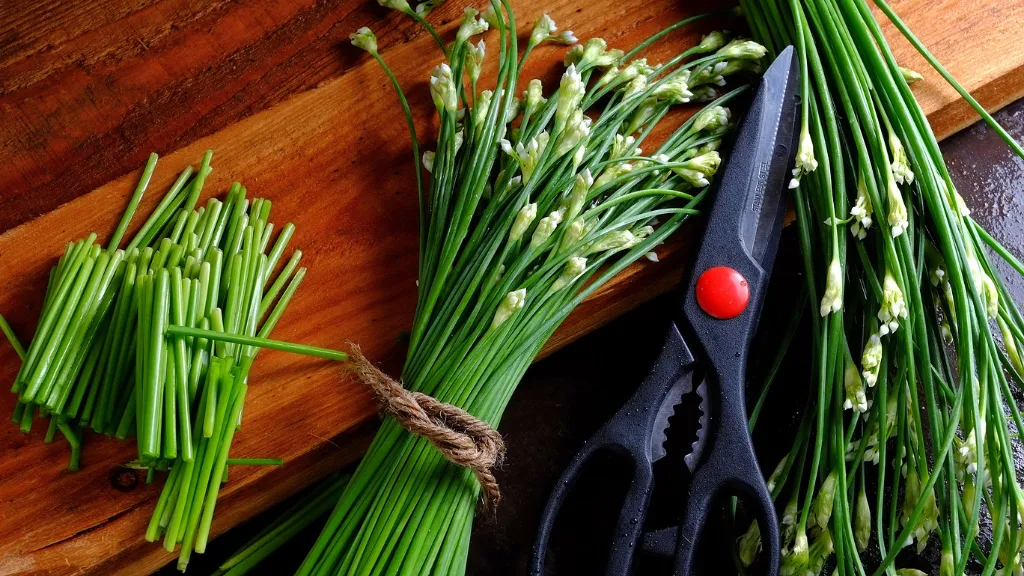
Then there are garlic chives (Allium tuberosum), also known as Chinese or Asian chives. These have flat, solid leaves and white, star-shaped flowers. As the name suggests, they have a subtle garlic punch and bloom later in the summer (August/September) than common chives.
We’re going to be talking here about common chives, the purple headed spring bloomers.
Growing Chives from Seed

It’s very easy to start chives from seed, both indoors and outdoors.
Indoors
- Start 6-8 weeks before the last frost.
- Plant chive seeds about 1/4 inch (6 mm) deep in the soil.
- Water well.
- Place the pot in a dark spot in temperatures 60 to 70 F (15-21 C).
- When the seeds sprout, move them into the light.
- When seedlings reach 6 inches (15 cm), you can transplant them to the garden.
Outdoors

- Wait until after the last frost.
- Plant chive seeds about 1/4 inch (6 mm) deep in the soil.
- Water well.
- The seeds may take a bit longer to germinate than indoors, because the soil needs time to warm up.
How to Grow Chives from Divisions
While seed propagation is possible, the most common way to grow chives is to start from divisions. In other words, you have to separate an older plant into multiple smaller plants.
Chives are victims of their own success, growing in dense clumps that have to be separated every three to four years to prevent overcrowding. The upshot is, you get more plants out of it.
- In early spring or mid fall, find an established clump of chives.
- Gently dig up the entire clump and pull off a smaller clump that contains 5-10 bulbs.
- Repeat this as many times as you want or can.
- Replant the smaller clumps at least 8-10 inches apart, or wherever you want more chives to take hold.
Growing Chives Indoors

There’s no rule that says you can’t grow chives indoors. In fact, chives are very well suited to indoor life, and usually perform the best of all the plants in an indoor herb garden. Grow indoor chives in a pot that drains well and is full of good potting soil. Place the pot in bright light. Harvest them just as you would outside.
Harvesting Chives

This of course brings us to harvesting chives. Wait until the plant is at least a foot (0.3 m) tall, then using a pair of shears, feel free to snip away as much as you need. You can cut back half of the plant’s growth without hurting it – it’ll grow right back. I personally have never found myself able to eat chives faster than they grow. I usually stop trying and just let them look pretty.
Speaking of which, those pretty purple flowers are edible as well. You can crumble them over a dish for a surprising purple garnish.
Chives in Winter

Can chives grow in winter? Unlike many herbs, chives actually benefit from a period of cold. It triggers their natural dormancy cycle and helps them grow stronger in the spring. That being said, they will die back and won’t be any good for harvesting.
If you want to harvest chives through the winter, there is a way.
- Leave them outdoors for the first few frosts – this will trigger dormancy.
- Dig up a clump and pot it.
- Bring the pot indoors and put it on a bright windowsill.
The dormant period followed by warmth will trick the plant into thinking it’s spring, and you’ll get a fresh winter harvest.
Essentials for Growing Chives


