






3 Beautiful Backyard Birds That Eat Wasps – And How to Attract Them to Your Yard
Reddit gardeners are making fake wasp nests from brown paper bags. I'd rather enlist the real thing: three beautiful birds that happily snack on wasps.


If you have spent the last few weeks seemingly confronted by wasps at every turn, you're not imagining things: late summer is prime wasp season. Which is, sure, great news for birds that eat wasps, but not so great for the rest of us.
By this point in the year, social wasp colonies have grown dramatically from their tiny spring beginnings. Yellowjackets, in particular, can become a real nuisance around outdoor food and drinks, although any wasps defending a disturbed nest can become increasingly defensive. So naturally, gardeners are looking for ways to kill wasps (or, y'know, send them elsewhere).
One suggestion I keep seeing on Reddit is particularly inventive: make a fake wasp nest out of a brown paper bag and hang it where you don't want wasps to build. The thinking is logical enough: that wasps are territorial and won't establish a new colony close to another one. And sure, there are plenty of anecdotal reports from gardeners who swear by the trick, including Reddit users who say they've had success with crumpled paper bags.
Personally, though, I find the evidence a little scanty. And if I'm going to stage war against the wasps in my yard, I'd rather forge an alliance with a few feathered friends than whip out the arts and crafts table.
Meet the Birds That Eat Wasps
Oh yes, stay the brown paper bag for a moment, because several beautiful backyard birds are perfectly happy to make wasps part of their diet. And while I wouldn't expect a bird feeder to magically clear your yard of stinging insects, encouraging natural predators is a lovely way to make your garden more wildlife-friendly while potentially lowering wasp numbers at the same time.
With that in mind, then, here are three birds that eat wasps like we eat Twinkies bars (along with a few tips on how to attract them to your yard)...
1. Summer Tanager

At the tip-top of the list of birds that eat wasps is the summer tanager, but that's putting it lightly, because these striking red birds don't merely eat the occasional wasp when one happens to cross their path. According to the Cornell Lab of Ornithology, summer tanagers specialize in catching bees and wasps on the wing, and they'll also raid nests for larvae. They catch flying insects in short sallies, then beat their prey against a perch before eating it (take that, wasps!).
There is something wonderfully satisfying about the image of a beautiful red songbird doing the gardening equivalent of pest control, but don't expect to lure one with a standard seed feeder; summer tanagers are more interested in insects, fruit and the habitat that supports them.
With that in mind, rather than trying to create a wasp-free garden, create a bird-friendly garden: grow native plants, keep mature trees where possible and consider fruiting shrubs that provide another food source.
Plant for Summer Tanagers:


Most importantly, avoid reaching for insecticide every time you spot an insect; a garden with plenty of natural insect life is more likely to provide the food that insect-eating birds are looking for.
2. Northern Mockingbird

The northern mockingbird may be better known for its extraordinary singing abilities, but this familiar backyard bird has another talent that gardeners might appreciate: eating insects.
Yes, it may not be on the list of birth month birds, but, during the summer, northern mockingbirds eat mainly insects, and their menu includes beetles, ants, grasshoppers, moths, and (you guessed it) wasps. They typically forage around open ground and shrubby vegetation, making them particularly well suited to suburban gardens.
Now, unlike summer tanagers, mockingbirds aren't wasp specialists. They're opportunistic feeders, which means they're taking advantage of whatever useful food your garden happens to provide.
The trick is to give them the sort of garden where they can forage naturally, then; Cornell recommends keeping some open lawn while also providing fruiting trees and shrubs, as they aren't particularly known for visiting conventional bird feeders.
3. Blue Jay

Now we get to the beaky wonder that really caught my attention when I started looking into the birds that eat wasps., as there are documented observations of blue jays attacking wasp nests to scoff up the larvae.
Check it out:
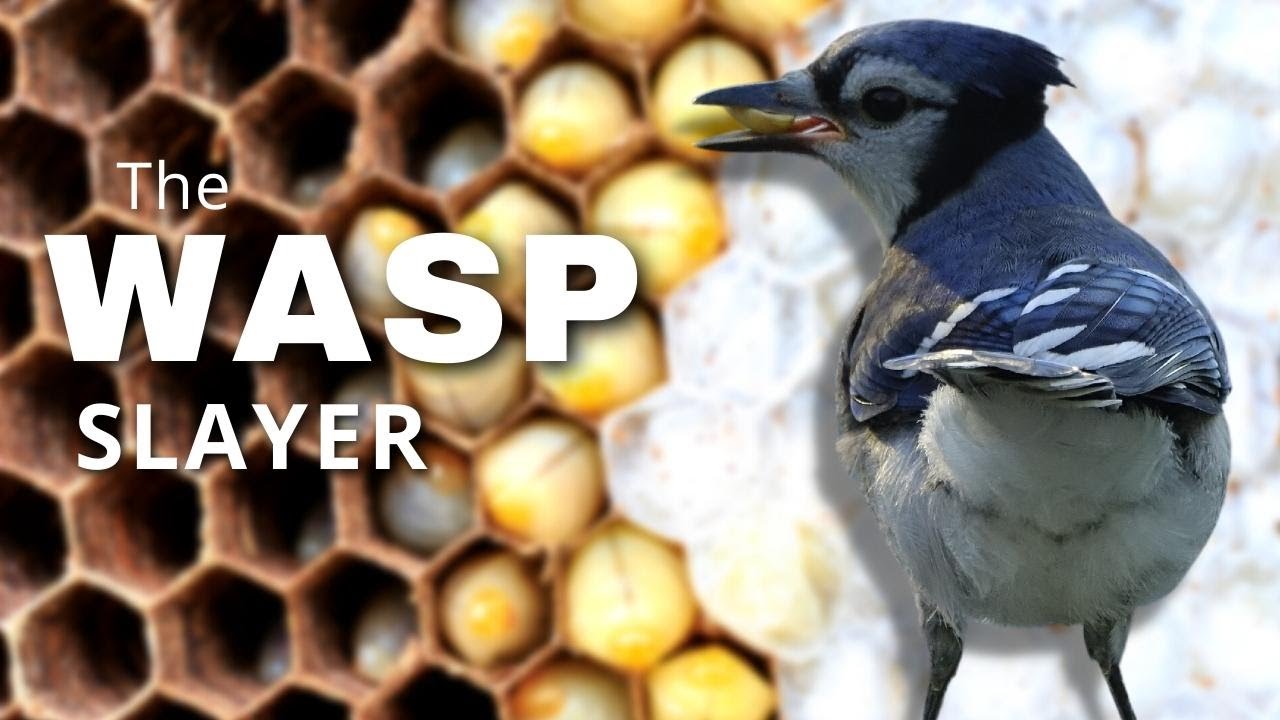
Pretty impressive, right? That said, blue jays are omnivores, and insects make up only part of their overall diet – Cornell's review of their stomach contents found that insects accounted for about 22% of the diet, with nuts, fruits and grains making up most of the remainder.
Think of their wasp-eating behavior as a useful bonus, rather than a biological pest-control service... but that's still worth laying out the red carpet, honestly! Thankfully, blue jays are regular visitors to bird feeders, particularly tray or hopper feeders, and adore peanuts, sunflower seeds and suet. They also readily use birdbaths, while oak trees provide one of their favorite natural foods: acorns.
Shop Blue Jay Feeding Essentials:


Just don't expect every blue jay you attract to immediately go looking for your wasp nest. You're creating good habitat and a reliable food source – what the bird does with the rest of its day is up to the bird.
Transform Your Garden Into a Bird-Friendly Paradise:


It should go without saying that birds aren't going to replace proper wasp control, particularly if you've discovered a nest close to a door, play area or another part of the yard where people are regularly exposed (seek professional expertise in this instance).
Still, if I'm choosing where to put my gardening energy in the meantime, I'd much rather spend it planting berry-producing shrubs, keeping mature trees, adding a birdbath and putting out a tray of unsalted peanuts.
Because if a few beautiful birds happen to arrive and eat some of the wasps along the way? Well, that's a gardening win I can get behind.
