August Is the Best Time to Collect These 7 Perennial Seeds for a Garden Full of Free Flowers Next Year
Catch seed pods before the birds do. Follow our guide to collecting, sieving, and storing perennial seeds during this short August window.


Perennials bought by the pot add up quickly, which is part of why seed saving keeps drifting back into fashion. The other part is timing. August sits in the middle of the ripening season for a lot of garden favorites. Pods that looked plump and soft in July are turning brown and brittle right about now.
Advice on the subject tends to point toward seed harvesting in autumn, which suits the last bloomers but comes far too late for anything that flowered in June. On some of these, a week of waiting costs the whole crop. One clump watched closely can teach more than any calendar can.
Perennials to Collect Seeds from in August
Three habits apply no matter what is being collected. Work on a dry afternoon rather than the morning after rain. Leave seeds out somewhere indoors and airy for a week to finish curing. Then store your seeds – these paper seed envelopes from Amazon are a better bet than a jar, because they won't allow moisture to build up.
1. Columbine

Columbine ripens ahead of nearly everything else here, so early August is often the last call instead of the opening bell. The pods stand upright in clusters of five and split across the top once the seed inside has gone glossy black. Tip the stem over a bowl and it empties in one motion. Green seed will not keep, however carefully it gets dried. Hardy from zones 3 to 8, columbine self-sows with real enthusiasm, so the volunteers crowding around the parent are worth leaving alone as a backup supply.
2. Oriental Poppy

Oriental poppy comes in the most convenient packaging in the garden. Its capsule dries to a hard tan shell with a ring of tiny openings under the cap. Turn one upside down and a fine dark dust pours out, barely coarser than ground pepper. Rattle a few before picking, because a capsule that stays silent has not finished ripening. Zones 3 to 7 are within range. The crown dies back to nothing by midsummer, so note where it sits while the stems are still standing.
3. Hollyhock
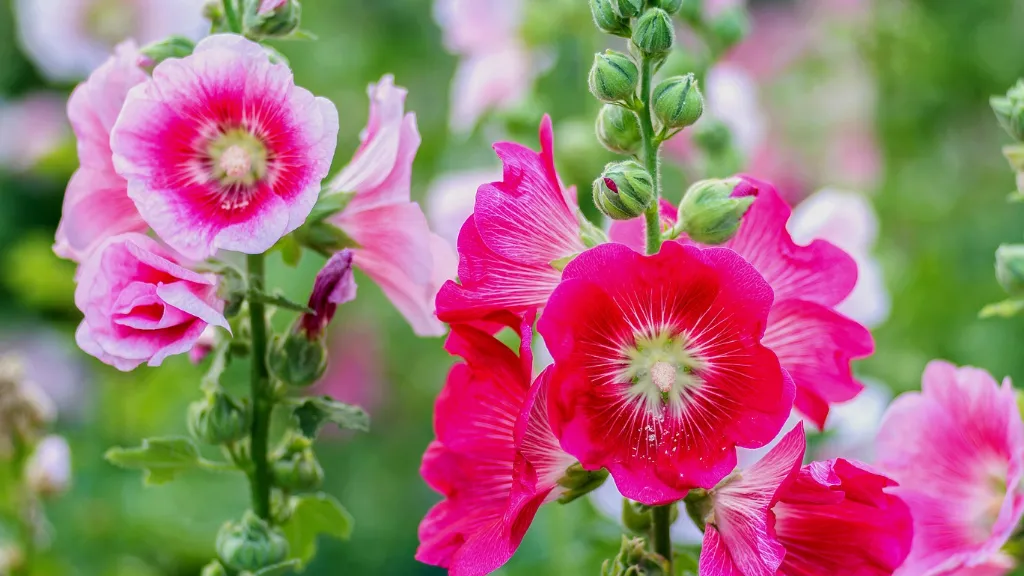
Flat green disks follow the flowers up a hollyhock spike. The ones near the bottom ripen weeks ahead of those at the top. Wait until a disk turns papery brown and breaks into wedges under light pressure. Each wedge holds a single seed. Zones 3 to 8 is the usual range, though hollyhock behaves more like a biennial than a true perennial, which is exactly why keeping a supply on hand matters.
4. Perennial Lupine

Lupine gives almost no warning at all. Its pods shift from green to gray-brown over a couple of days, then twist open and fling the seed several feet (about 1m) clear of the crown. Check them every morning once the color starts to turn. A pair of bypass pruning shears from Home Depot makes short work of the whole stalk. The stalk can then finish splitting inside a paper bag where nothing escapes. It grows across zones 3 to 8. Weevils get into a percentage most years, so a spell in the freezer counts as cheap insurance before the seed goes away for winter.
5. Blazing Star

Blazing star never makes the moment obvious, because the spike turns tan from the top downward over several weeks. Tug gently at the fluff. Seed that lets go without a fight is ready. The rest needs more time. Blazing star performs from zone 3 to zone 9. It also puts out a fair number of hollow duds alongside the good material, so roll a few between finger and thumb — the plump ones are easy to feel out from the empty. There is no need to clean the fluff out of a batch before it goes into a packet.
6. Balloon Flower

Balloon flower capsules split into a neat five-pointed star at the top when the contents are ready. By then the stem has usually yellowed. Cut below the capsule and turn it over. Flat dark seed slides straight out with no cleaning needed. The comfortable range runs from zone 3 to zone 8. That long taproot makes division a gamble, and replacements raised from saved seed prove far more dependable than lifting and splitting an old clump. Wet weather during ripening spoils more batches than birds ever do.
7. Anise Hyssop

Anise hyssop, also known as agastache, asks less of a gardener than anything else on this list. The flower spike dries into a brown bottlebrush. By mid-August the seed is loose inside it, so a bag held underneath and a firm shake will collect most of what is there. What comes off is more chaff than seed at first. Push the mix through a 1mm straining mesh sheets from Walmart and the chaff stays behind. Zones 4 to 8 are home ground. It self-sows freely enough that some gardeners cut the spikes purely to keep the colony in check.
