Are you tired of looking at the same old plants in your yard, year after year? If you’d like to try something different, and maybe save some money in the process, you might be interested in trying edible landscaping.
Not all edible plants are easily recognized as vegetables; a good thing, if you’d prefer to not have your neighbors come over and sample your produce! Some of the best-and easiest to grow-are these:
Romanesco Broccoli. Native to Italy, this bright, lime green plant grows in swirled spikes that look remarkably like neon green coral. You can use it in salads, raw or steamed, or simply use it as you would regular broccoli. Plant in March to June in well drained, rich soil, in a sunny location, 9 to 10 inches apart. This plant would look great as a border planting, or grouped in containers.
Sweet Bay. You’re probably familiar with this plant already, but have you ever thought about using it as a living topiary? Bay trees can be formed into interesting shapes using only wire and a few well-placed supports.
Carrots. That’s right-your everyday carrot can be a good decorative plant. The tops, when fully grown, look like small ferns (the tops are edible, as well-they have a spicy bite that livens up green salads). Plant them in groups in soft soil and a sunny location, and when you’re tired of your “ferns”, you can pull them up for fresh carrots.
Spring Beauty. This perennial wildflower has delicate white blooms with purple or pink veins, grows low to the ground, and tolerates partial shade to full sun. The bulbs are edible, and taste like a cross between a walnut and a potato. They’re excellent simply scrubbed clean and fried in butter, but don’t do well mashed. In the yard, they make a pretty groundcover or border plant.
Paw Paw Trees. You may have seen these growing in your neighbors’ yards, but never realized they were actually edible. These trees have dark green, glossy leaves and well formed branches, and bear a long, bulbous fruit that tastes somewhat like bananas.
Dill. If you’ve never grown dill before, you’ll be surprised to see how much it looks like Queen Anne’s Lace. Dill is a tall, spiky plant, so it looks good as a background plant in a small flower bed. Use it in cooking fish, meats, or pickling cucumbers.
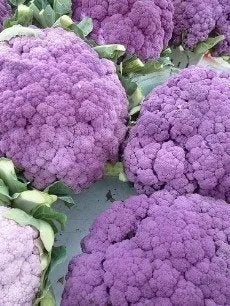
Purple Cauliflower. Most people will recognize this as an edible plant, but that doesn’t mean it can’t be decorative. Planted in small groups or containers, the purple variety of cauliflower looks like large flowers, especially if you remove some of the bottom leaves.
Cabbage. Again, this is a common plant, but the red varieties can be used in containers for accent plants. Remove the bottom leaves to create a “stem” for each plant, and when the leaves unfurl, they’ll look remarkably like giant rose blossoms.
White Tomatoes. Yes, there are white tomatoes! The white cherry varieties look exotic and quite beautiful in hanging baskets, especially when they start fruiting. They have a sweet taste, and look great in salads.
Leaf Lettuce. Plain old leaf lettuce can be used as a decorative plant, ground cover, or intermixed with flowering plants to create an interesting flower bed. What could be better than being able to walk outside and pick your salad?
Cocoa Plants. This tropical plant does well in warm, moist climates, and has dramatic, glossy leaves that look good as a backdrop or grouped planting. The “beans” can be ground in a coffee mill for the richest, most spectacular chocolate coffee you will ever taste, or processed to make your own chocolate. For those who are concerned about the legality of owning cocoa plants, they are legal in the United States; just don’t try to process the leaves!
Grapes. The large, shimmying leaves, abundant fruit, and welcome shade provided by these plants are reason enough to try growing your own grapes. They look gorgeous growing over the top of a gazebo, and even if you never harvest them, they provide food for wild birds and small wildlife. Make sure you plant them where you really want them, though, because once they get established, they can be hard to remove. You should keep dogs away from your grapes, by the way, because they’re toxic to our canine friends.
Saffron. These large yellow flowers are beautiful in their own right, and the source of one of the most expensive spices on the planet. They grow well in sunny, well drained soil, and make spectacular group plantings. To harvest the spice, you’ll need to be patient; the “spice” is actually the bright yellow-orange tips of the stamens. Pick them off with tweezers and drop into a vial or herb bottle, and use it fresh, or take it inside to dry in a protected area on waxed paper.
Mayapple. Also known as mandrake, this plant has an undeserved reputation as being too “dangerous” to be a lawn plant. Actually, it is toxic to humans; the leaves, flowers, stems, and roots are all toxic. However, the fruit-the “apples”-are edible, and quite good. Obviously, this plant isn’t a good choice for yards where small children play and might be tempted to sample the leaves! But if you’re the type of person who likes puffer fish, you’ll probably enjoy mayapple as well.
Hopefully, you’ll come up with your own ideas for using edible plants in your landscaping, and you’ll come to appreciate how much better fresh produce tastes as opposed to the bland stuff available in your local grocery. Edible landscaping is one of the best things you can do for the environment, as well, so if you need a reason to get started, you can always say you’re doing your part to combat global warming!